I studied Game Design for 5 years,
during those studies I came to create a lot of varied projects with simple concepts and through those projects I discovered what I liked doing, how I should (and shouldn't) make it happen as well as why it matters to me.
I tried a lot of different things (not everything is showcased here) :
-Mobile and AR games (Mariachi)
-an Online Multiplayer game (MARBL)
-Procedurally generated game fields (TurboTilt & Necropunch)
-an Arcade Controller game (Necropunch)
This Creator Story is a collection of small experiences gathered from my school projects each of them taught me important things about game-making, about human relationships and of course, about myself.
Second year of studies (2017-2018), Rubika, Valenciennes, France.
Necropunch - "The player comes first, and the team should be second"
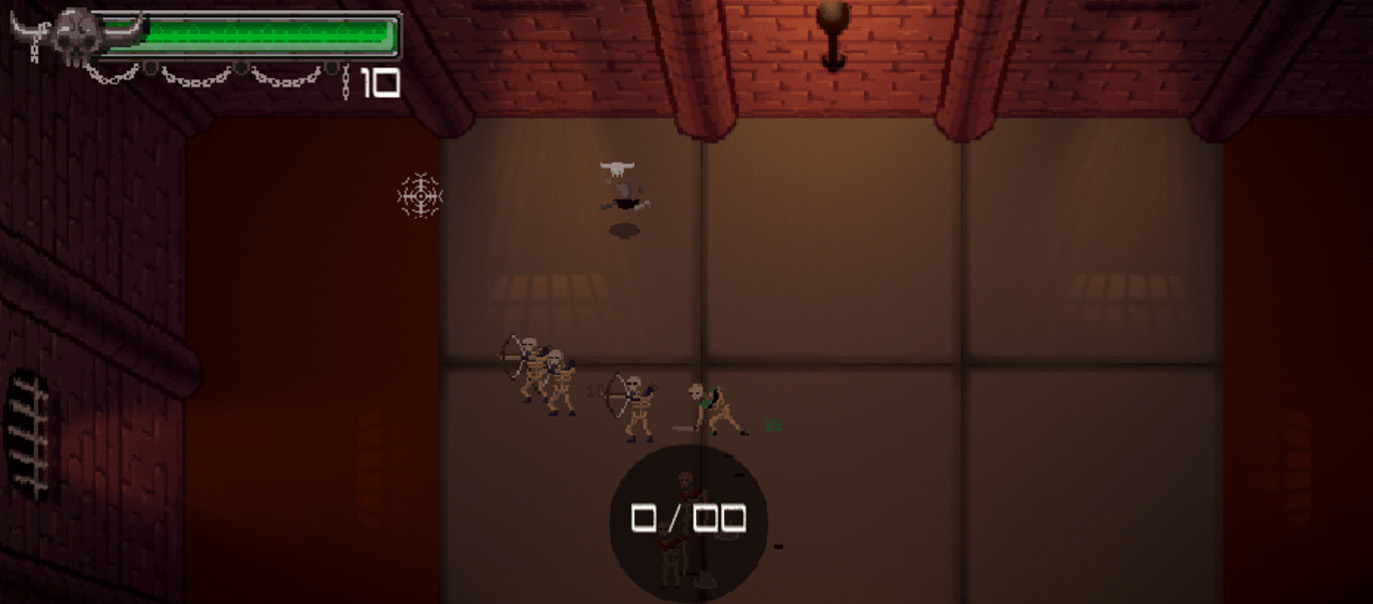
We had one year to create a "Zelda-like" 2D Game in a team of 7 students. We had to work on it part-time after our lessons. Our objective was simple : to create an original experience ! I mean, when is the next time we'll be able to create games on our own terms, right ? So we started our endeavor by writing a little story about a character mocking video game tropes. Our unusual premise was that the land was ruled by an evil necromancer that grew tired of scaring people and got bored. One day by accident he killed an adventurous boy in a carriage accident. And to make up for it he decided to use his powers to revive him. But that accidentally made the boy exceptionally powerful. And so while teaching the boy to control his new body, the necromancer got killed once again by accident. Rendered immortal by his power, his soul stabilized and swore to torment the hero if he didn't help him come back to life. We gave our hero an unusual weapon, a chain, to fight hordes of undead forces and to tie them together with combo moves.
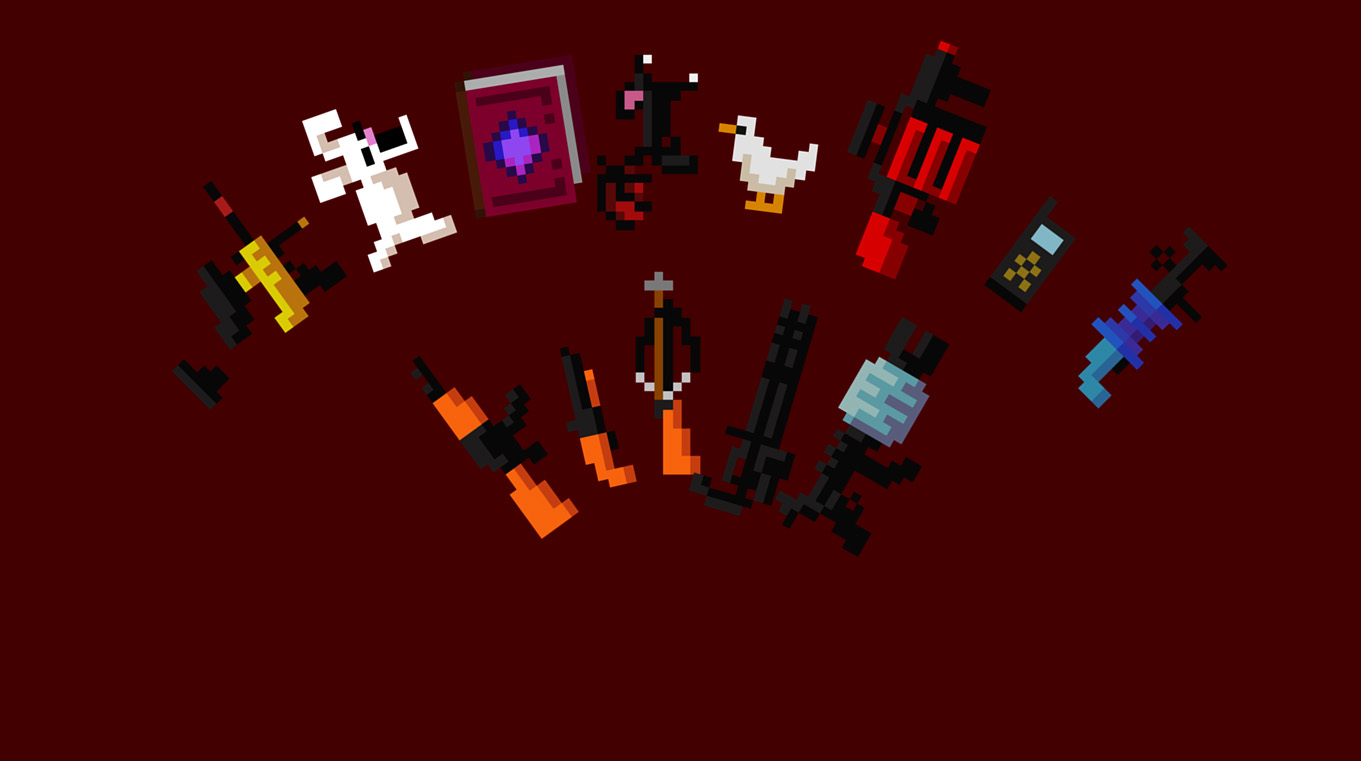
Necropunch's arsenal, from classical to very goofy
Our group was hyped up by this premise but nobody had enough skills to bring it to life. We made progress but because of our weaknesses, work was slow and learning to overcome our problems took much longer than anticipated. We had to decide, create our original game or listen to the feedback we got from playtests and focus on fun elements in the game. Some members of our team weren't working as much as others and at the time, my team leading skill was... well it was ignorant and insensitive. I would push out the troublesome members, instead of helping them and in the end maybe they would have helped me ! I reworked the game to make sure that the "remaining" members would be able to finish it in time. It would become an arena fighter to which we added throwaway weapons controlled via twin-stick aim. It was far away from the original pitch but instead of chasing originality we decided to strive for what our players wanted and what made them feel glad to play. Through regular playtests we gathered players' feedback and from that feedback we refined our tasks and objectives to reach the most pleasant experience we could create.
At the end of the project, I realized how many human mistakes I made, how many planning errors we came across and I swore that I would never be blinded by my own ambitions ever again. Fellow developers deserve respect and if we are on the same team we need communication ! I'm glad I got to learn from those mistakes early on in my studies, it's what matters, and I'm glad I chased the player's approval instead of the original idea. Their smiles and the sparkles in their eyes when they told us what they enjoyed the most about the game as well as the things they were excited to see in the future version. This feeling is definitely one of the most rewarding I know of and I want to create more to experience it in the future. Ideas evolve and if they become something truly enjoyable to the players then it's worth it to pursue it.
Third year of studies (2018-2019), Rubika, Valenciennes, France.
Turbo-Tilt - "Simple and Clean is better than Complex but Rough"
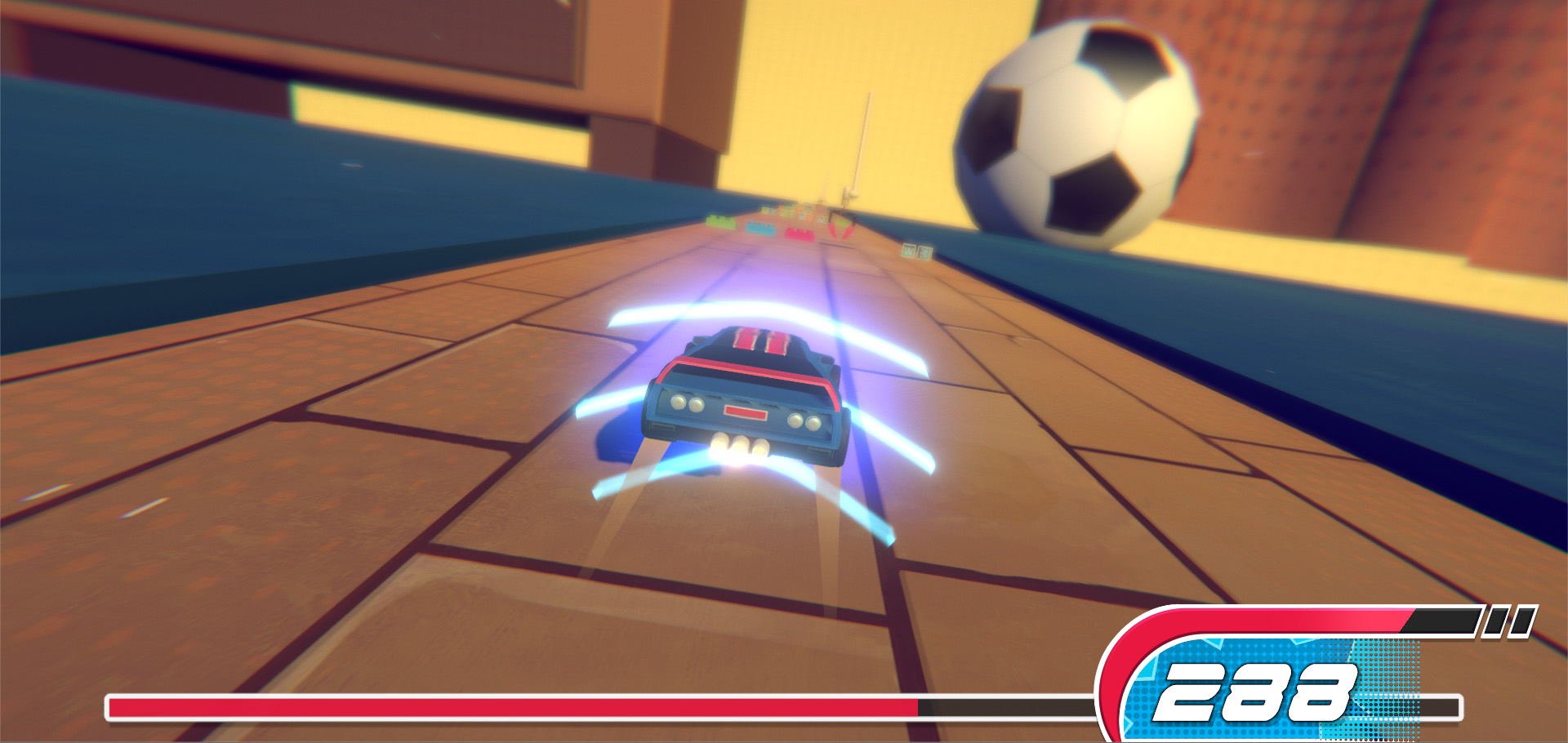
In the middle of my third year, we had this cool concept to work on, we were 48 duos of a game designer and a game artist to create mini-games with dynamic difficulties. Those mini-games would then be mashed-up in a Warioware inspired experience ! I was paired with a friend of mine and we decided to create a game about a toy car driving down a fictional road dodging obstacles, the way children would imagine it ! So it would be over the top in terms of special effects and presentation but very simple to play.
It was very pleasant to tackle on every challenge by ourselves and I particularly enjoyed how we found a twist to use a single button instead of two. Making the road slightly slanted to the right so that the player would only need a button to turn left. In the two months of work that we had, we made a lot of fast iterations, being able to find the right control scheme, the right algorithms for level generation and adding effects like audio synchronization with the main music and transition effects between games.
This project allowed me to explore many elements that I've been willing to try before (Unity's Cinemachine, Advanced Procedural Generation, focusing on a single mechanic,...) and in the end it allowed me to create a very condensed piece of fun that inspired me to focus on the individual value of mechanics in my future works to further upgrade their quality when they blend together. From this point onward complex games started to feel less appealing to me and my preferences were starting to take form.
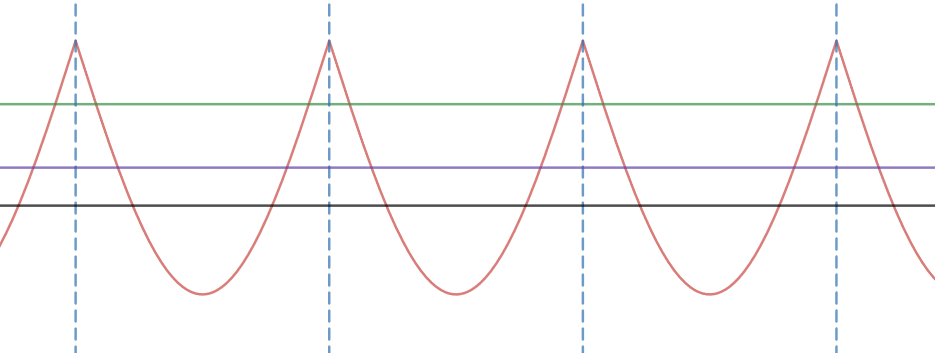
Mariachi's input curve, it had to be synced to the BPM of every music to track how close the player is to hitting the right rythm.
Mariachi - "You CAN focus too much on one thing."
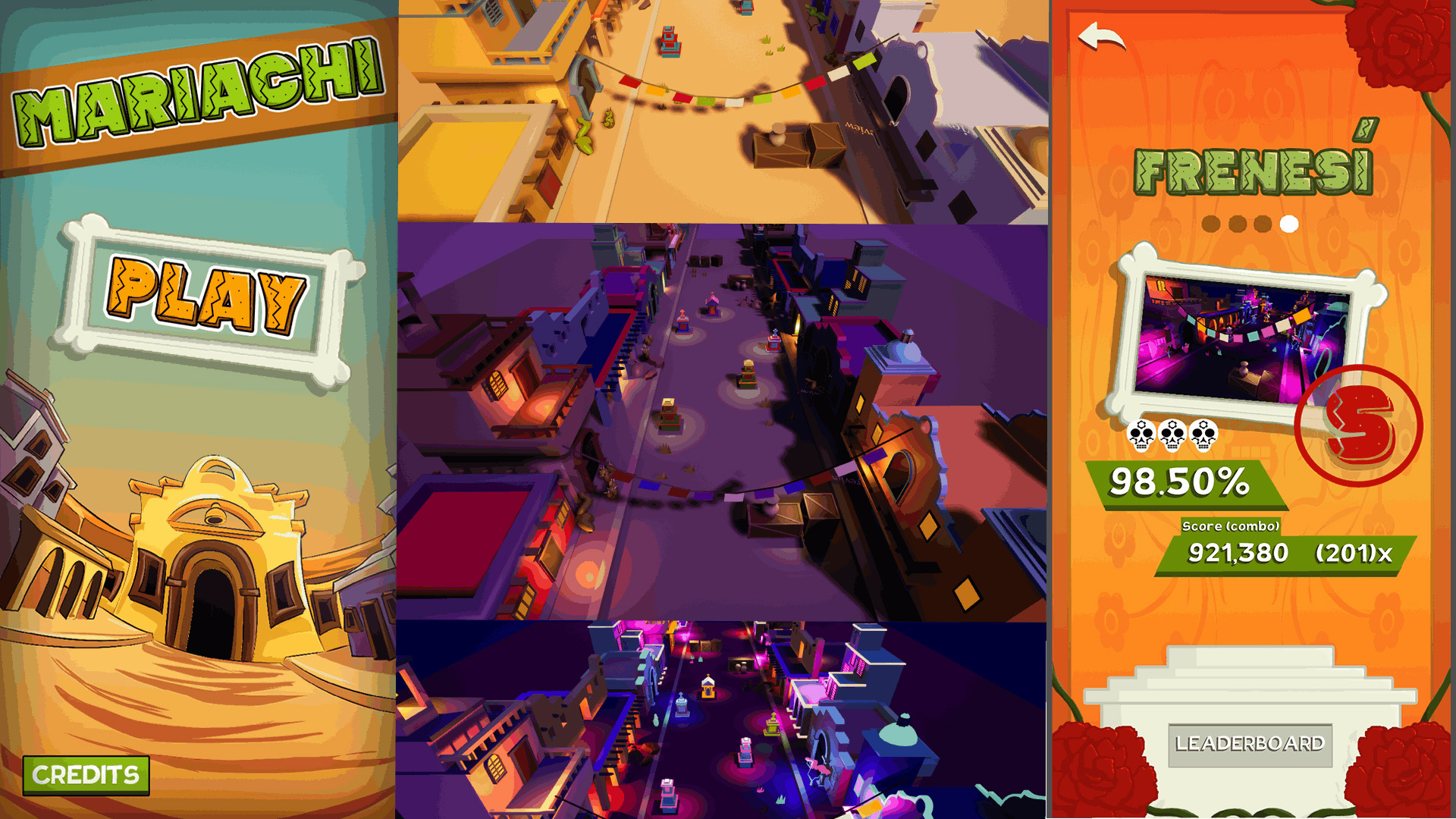
The second half on my third year was spent working on a mobile rhythm game. I worked with 2 other game designers as well as 3 game artists and together we decided to sharpen our skills in various fields. I decided to focus on scripting elements and I worked on the problems that were brought by the android platform. I worked on FMOD to try and stabilize input recognition, when it comes to music and rhythm, android can get a bit grumpy.
I used mathematics to find a curve that would describe accuracy levels for the player's inputs. One of our game designers was an expert on rhythm game so we trusted him to handle level design and everything related to music while our third game designer mostly handled feedback. My main tools were Unity, Desmos and Excel and I was getting pretty good at coordinating them. I ended up creating custom tools to test the technical limitations of our project and I enjoyed getting very precise with my work.
Sadly the end result wasn't very fun to play. I lost track of the whole experience while focusing on my tasks and it showed, this project taught me that even if I enjoyed working on specific aspects of a game, I should never lose track of the bigger picture and I should always portray the player's experience from my own work's perspective. Also to not be afraid to report to other members of the team if they are more suited to solve issues that I find.
Fourth year of studies (2019-2020), Rubika, Valenciennes, France.
MARBL - "The Modular Approach"
This fourth year of my studies marked my transition from game design to game programming in order to refine my technical skills and broaden my vision of game design. I wanted to put the emphasis on logic and to acquire more knowledge on programming to communicate better with my future colleagues.
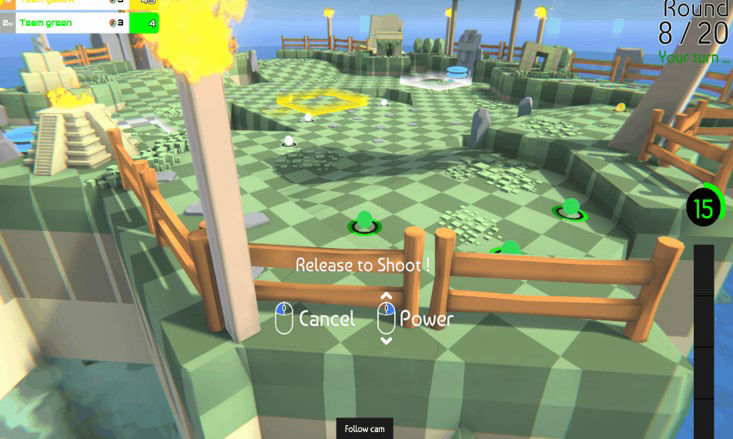
Half of our year would be dedicated to a PC game made between game designers and programmers (and yes we had to do the art ourselves). Everyone could come up and pitch an idea and wouldn't you know it but mine got picked ! I was thrilled to announce the production of MARBL a game about playing marbles. That meant heavy physics usage on a turn based multiplayer online game ! My team however was composed of multiple people I had worked with in the past with bad results so I wasn't too eager to starting to get my hands dirty, but I buried the hatchet in order to maximize our chance to do something great !
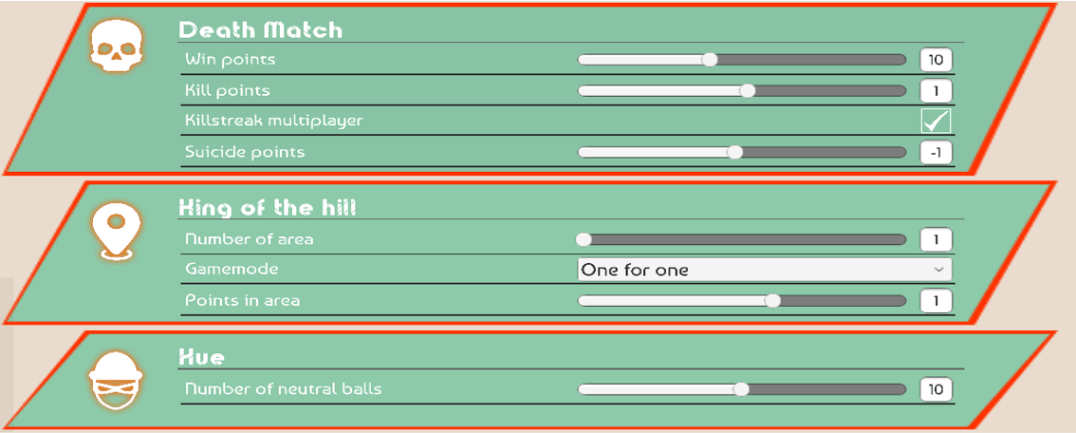
MARBL's modular modes with sliders for individual parameters
We based our game on a modular approach, that means that every "game mode" was a set of rules to score and/or lose points, and you could stack them together to create meta-modes that could be fully customized and saved to your PC to share them with other players. Of course we made our own presets before the game got shown to our jury, and we had to create some maps to host this mayhem of a game !
While the concept of the game was very childish, the team spirit wasn't so lighthearted. Tension rose, motivation dropped and soon enough I had to endorse multiple roles once again. I didn't complain, we had work to do, so I had to work closely with the game designers to get the precision needed for the other programmers to work correctly. I also jumped between meetings with the programmers so that they would listen to the game designers and in the middle of all that, handling some of the art of the game. I saw the impact of all of this too late in production and the game lost some of its quality because of my lack of delegation. In the last month tasks were a bit more segmented.
I learned that you can't handle everything in a limited time. But also that you need to be part of a team where trust reigns. I was pleased to experiment with modularity, mechanics and their collective behavior. But this modularity also applied to my skills, using all of them at once or separately to reach the objective proved very refreshing and natural to me.
Over the years, the projects I wrote about and those I didn't, I worked in many groups. Most of the time the results weren't on par with my teams' expectations, but every time I gave in everything I had and I discovered even more then, I learned things about games, about working with others, about time management. But in the end what I learned the is most valuable to me was what I liked, what I didn't like, how I was handling situations, and I learned who I was as a professional.
"When confronted with problems, you find solutions.
When confronted with harsh situations, you find yourself."
Made with Mobirise - Check this